Do You Actually Need a Nursery Chair? An Honest Answer
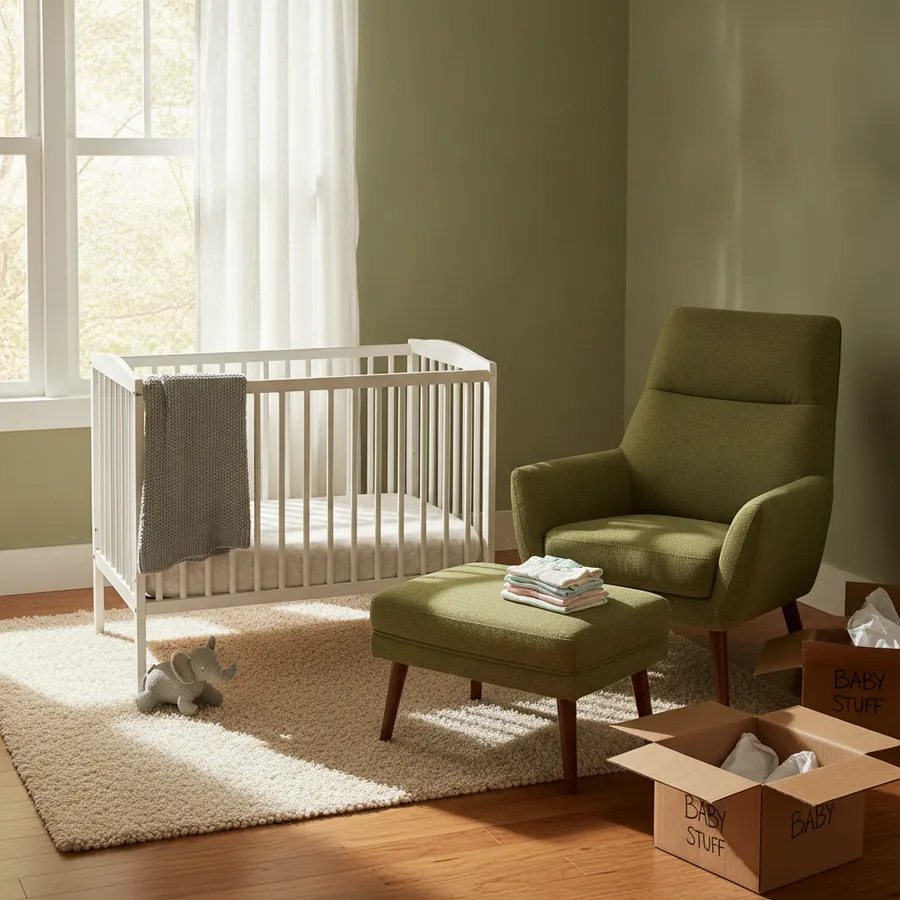
AI-generated representative image — not an actual photo of a real nursery.
Every nursery checklist tells you to buy one. Almost none of them tell you when you honestly don't need to. Here's the balanced version — including the "no."
What a nursery chair is actually for
Strip away the decor angle and a nursery chair does two real jobs: it supports long feeding sessions (whether that's breastfeeding, bottle feeding, or pumping) without your arms, shoulders, or back giving out, and it gives you a consistent, comfortable spot for the routines that happen at 2am when you're barely awake enough to make decisions.
That's it. It's not really about matching the crib, and it's not a requirement in the way a car seat or a crib actually is — nobody is going to ask you at the hospital whether you own one.
When you can genuinely skip it
If you already have a comfortable chair, glider, or recliner somewhere in your home — even if it's in the living room, not a dedicated nursery — that's often completely fine. The specific requirements are pretty simple: something with real back support, arms you can rest on at roughly elbow height, and ideally something that doesn't require you to brace your core to stand up from (more on that below). A lot of existing furniture already checks those boxes.
It's also fair to skip it, at least at first, if you're not sure yet how you'll be feeding, or if money is genuinely tight and something else on the list matters more right now. A dedicated chair is one of the more expensive line items on a lot of nursery checklists, and it's not the one that actually needs to be bought before baby arrives.
When it's worth buying
The honest case for spending real money on a dedicated chair comes down to a specific, physical reason — not just "it would be nice." A few that actually hold up:
- You're recovering from a C-section. For several weeks, you're not supposed to engage your abs — which is exactly the motion of pushing yourself up out of a low, unsupportive chair. A chair with proper arm height and, ideally, powered recline genuinely changes how much that specific movement costs you. We wrote a full guide on this if it applies to you.
- You already know feeding has been hard on your body before. Shoulder, neck, or back strain from unsupported feeding positions is common enough that it has a name in a lot of parenting forums — "mom claw" is one — and it's a real, physical reason to want better arm support, not a nice-to-have.
- You genuinely don't have anything comfortable already, and you know you'll be spending hours a day in it for months.
None of these are "everyone needs this." They're specific situations where the honest answer is yes.
What to look for if you decide to buy one
If you've landed on "yes, I want one," the features that actually matter are narrower than most product listings make them sound:
- Arm height and support you can actually rest into, not just decorative armrests
- A seat and recline that don't require you to brace your core to get in and out of, especially in the first few postpartum weeks
- Real width if you plan to sit with a toddler or partner, not just the baby
- Honest reviews, not just manufacturer photos — the difference between a listing's promise and what real owners report is usually where the useful information actually is
If that's the stage you're at, we wrote an honest, feature-by-feature review of a specific power recliner covering exactly this — including the parts that didn't go perfectly for some buyers.